



Knowledge Cards
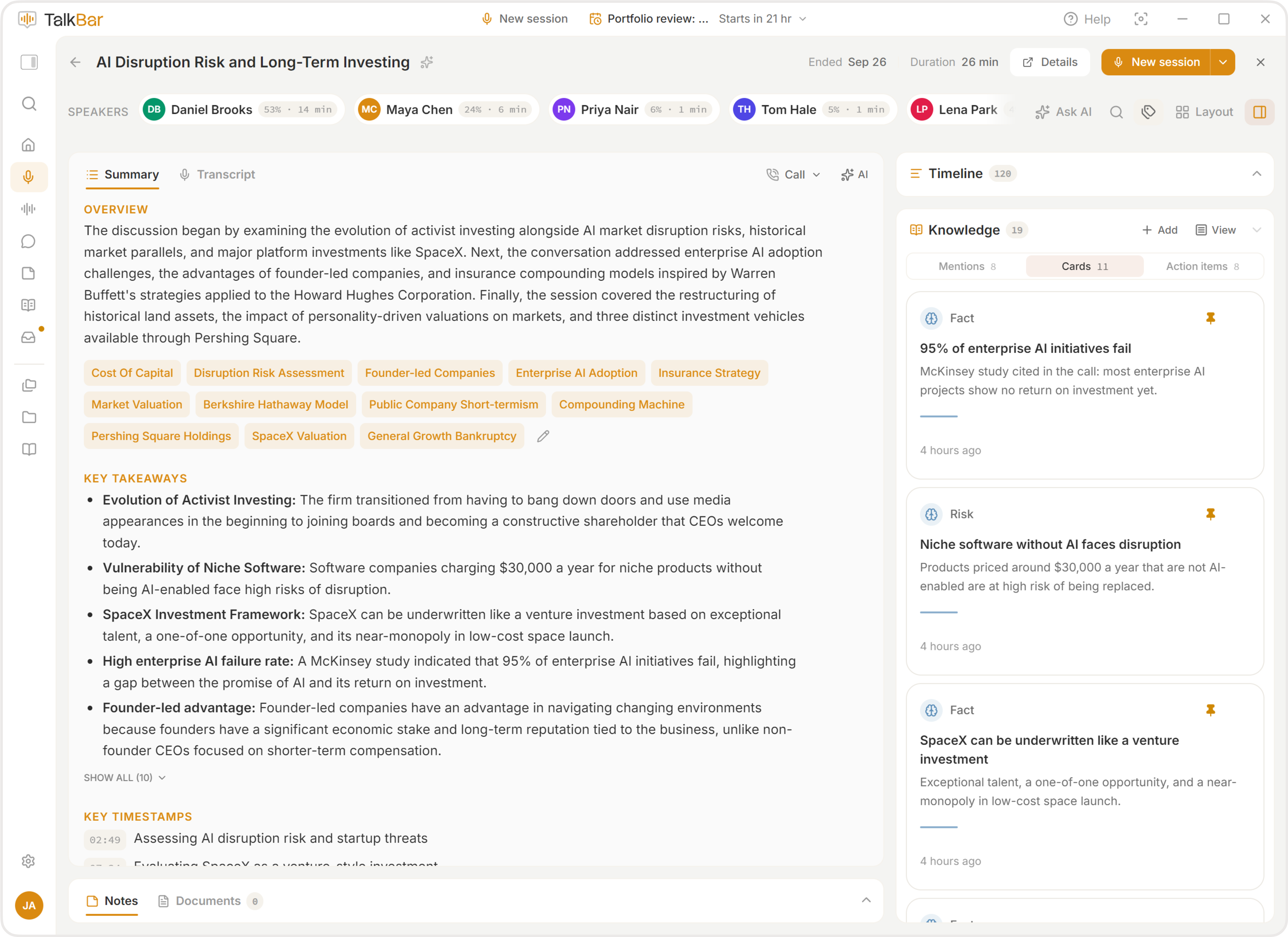
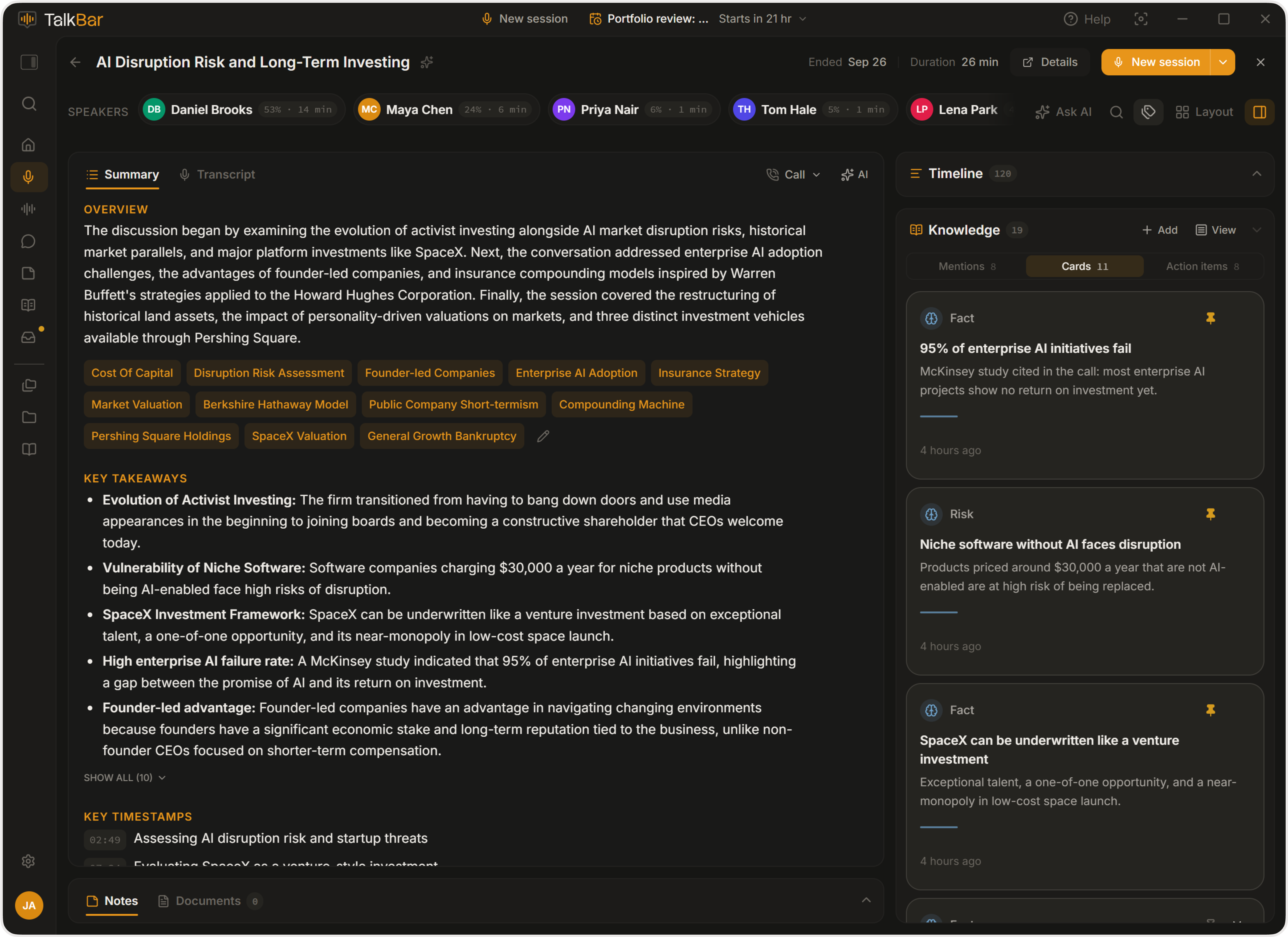
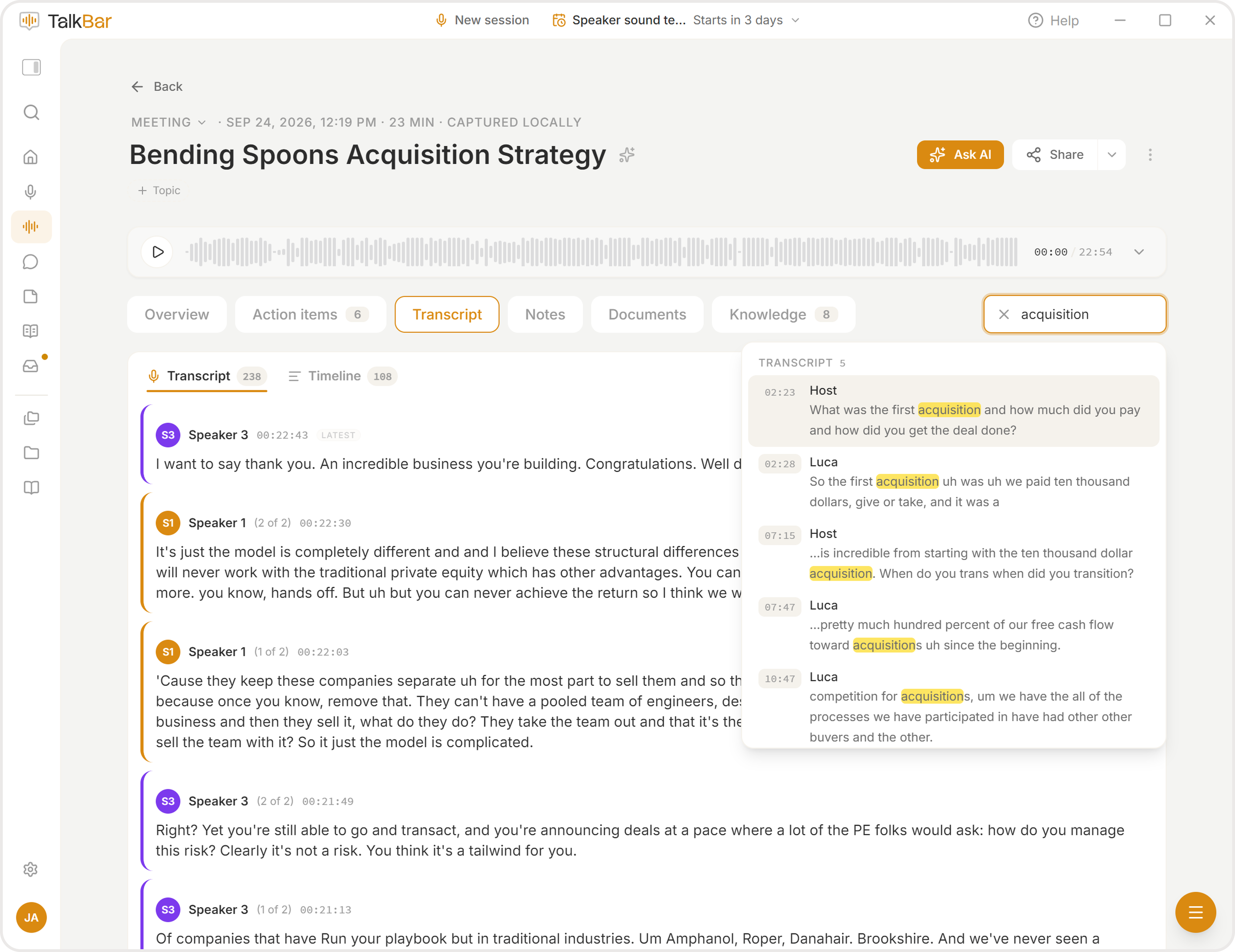
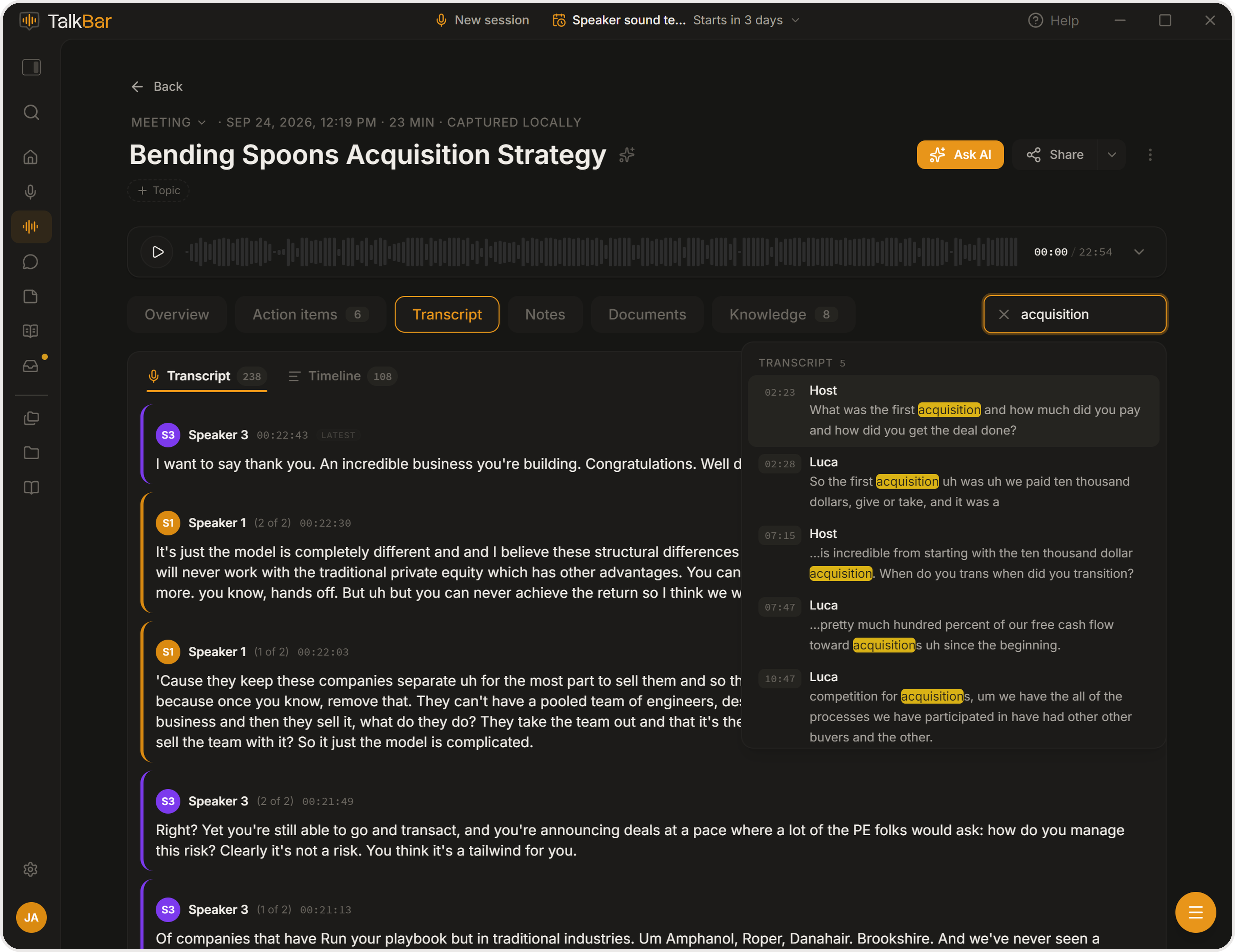
The Knowledge Cards and action items you attached light up when the conversation reaches them.
Keep criteria, prior answers, and themes in reach during candidate, research, and expert interviews, and turn each one into consistent notes you can refine.
Runs on your machine · Local AI or your own key · No meeting bot
Interviewers have to listen deeply while holding criteria, prior answers, themes, and the next question in mind.
“The next question is usually hidden in the context you already have.”
The output has to be consistent, but the conversation should still feel natural.
Put role criteria and your must-ask questions on Knowledge Cards; they light up when the candidate gets there.
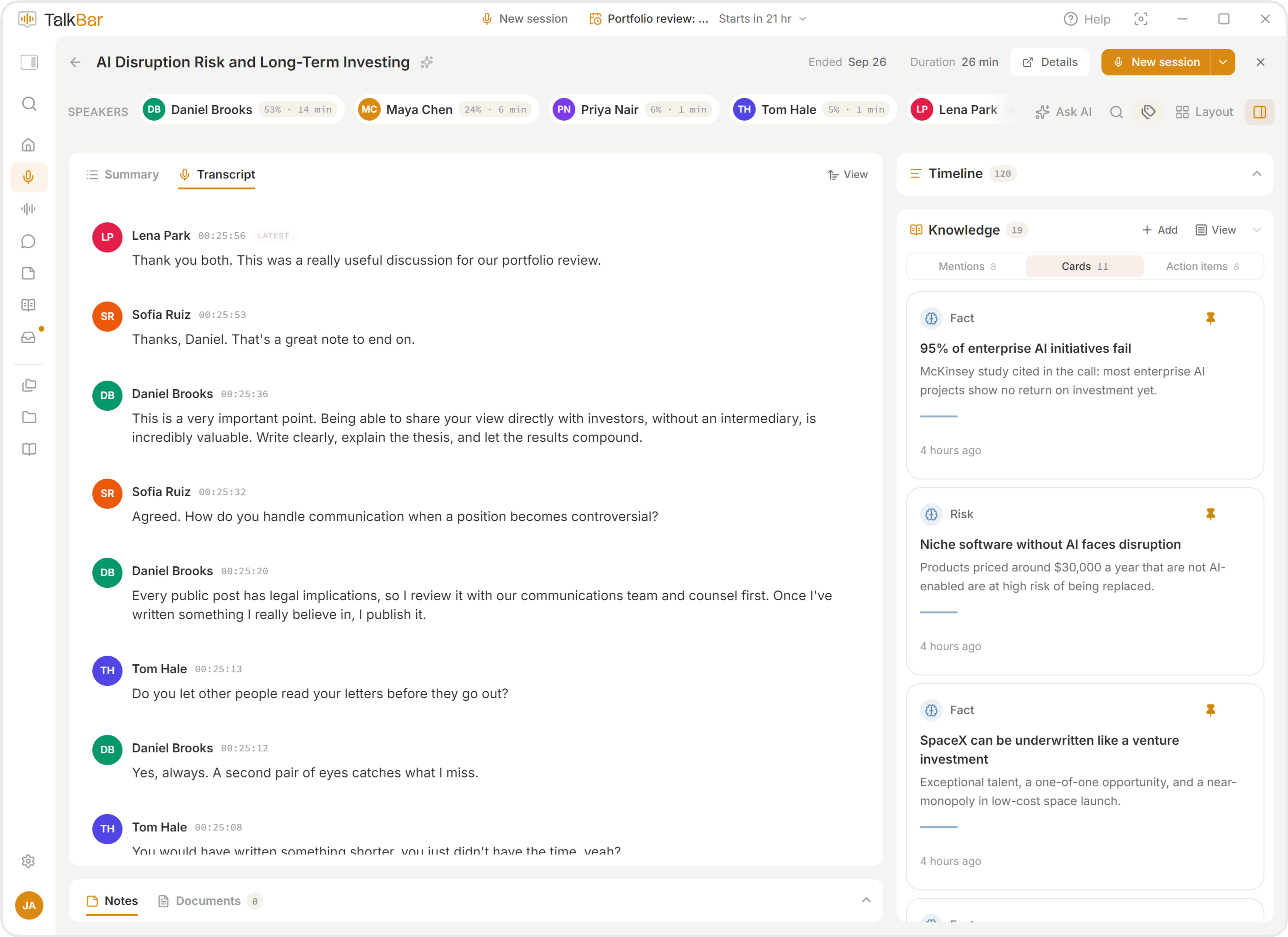
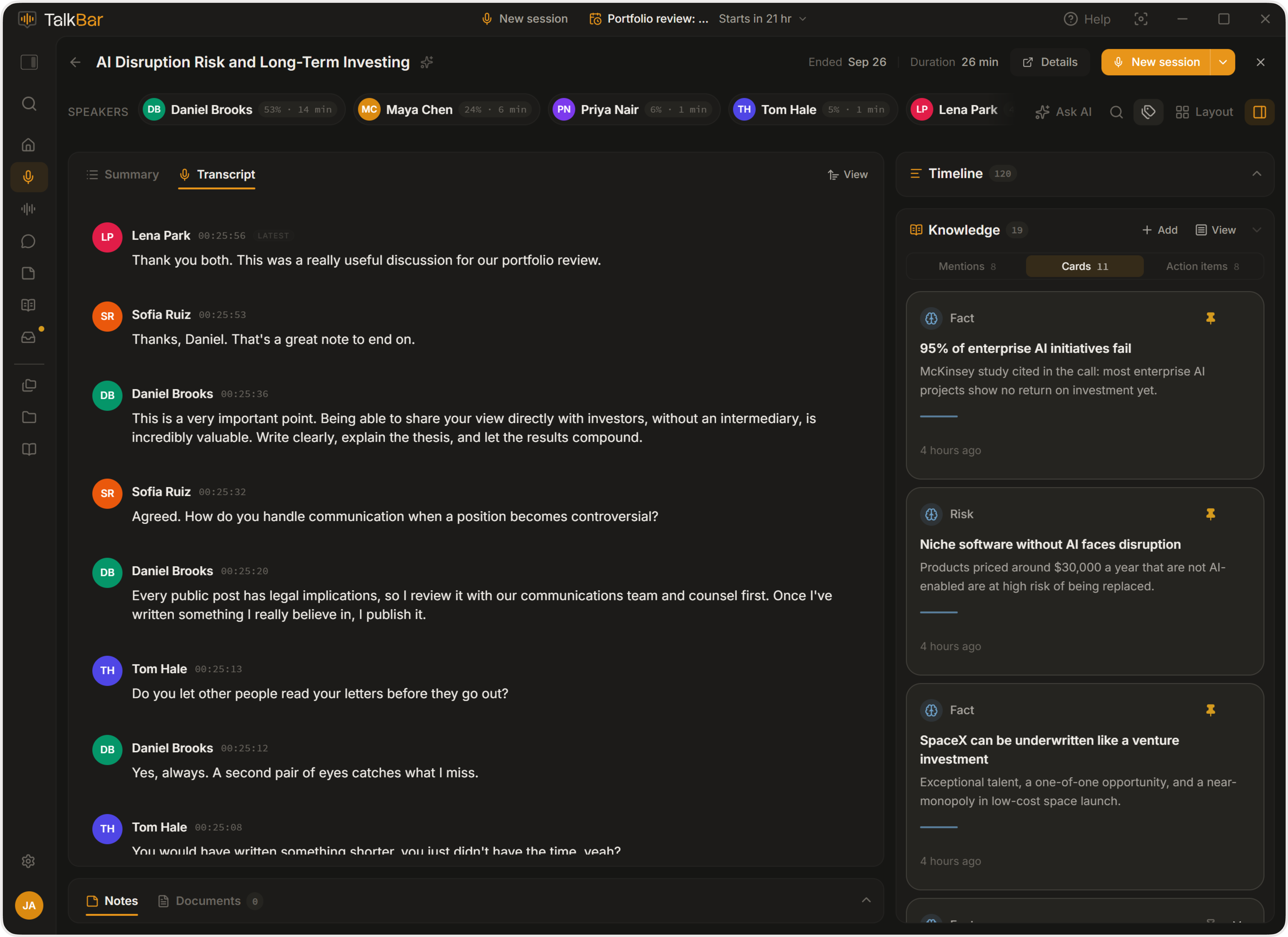
Interview evidence, quotes, and notes stay searchable by person, project, or label.
Pick an interview template, and the summary comes back organized by criteria, evidence, strengths, risks, and follow-ups, ready to refine.
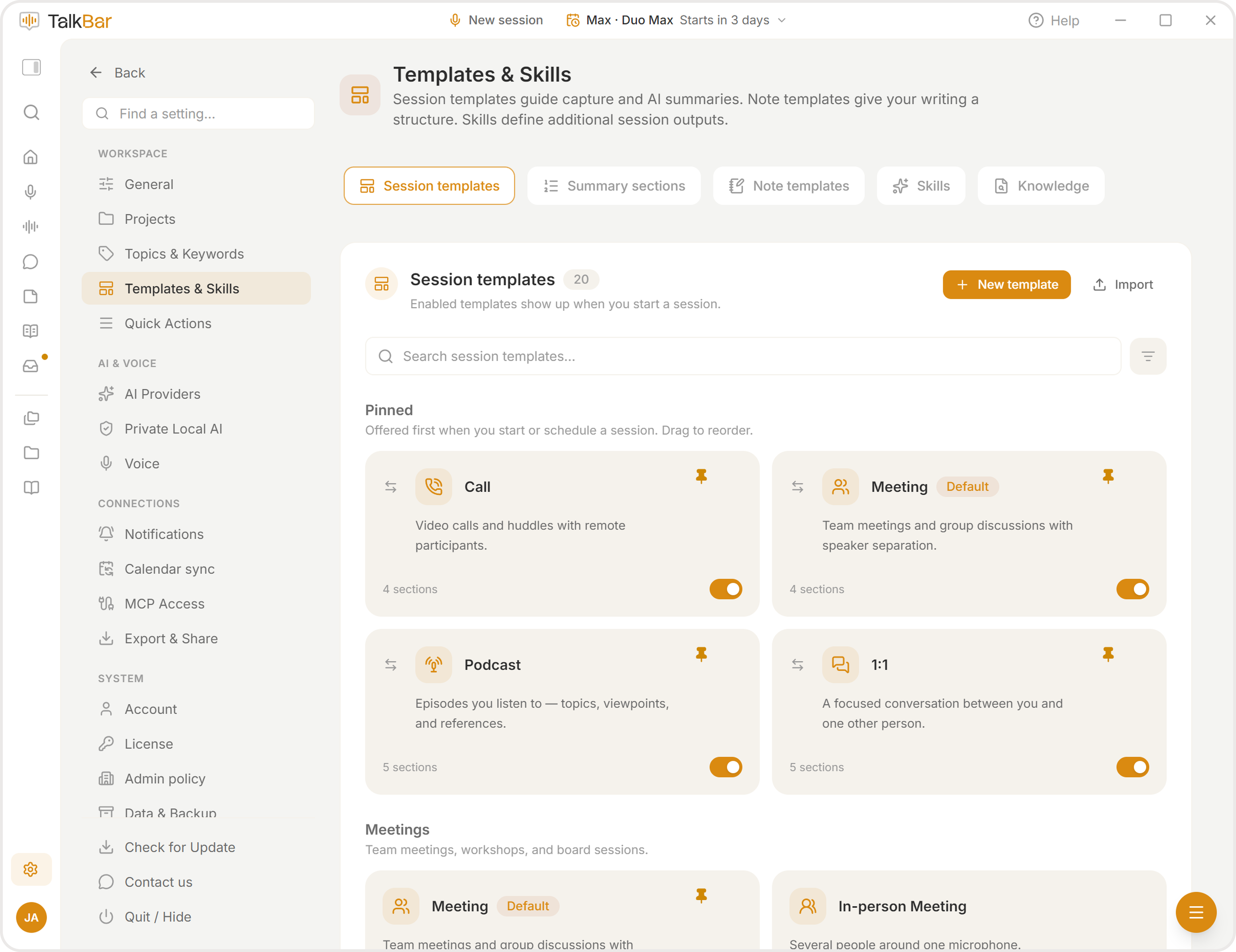
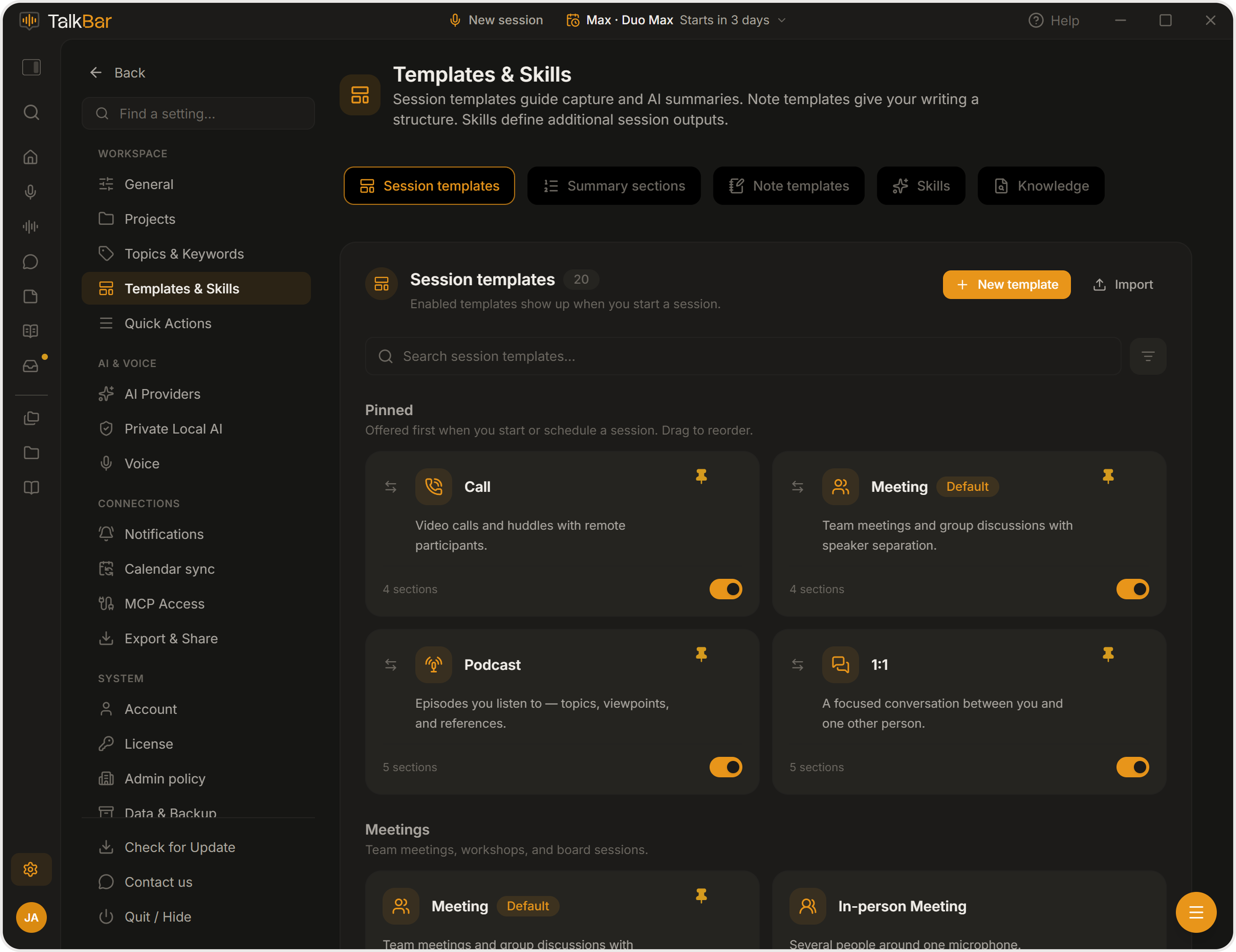
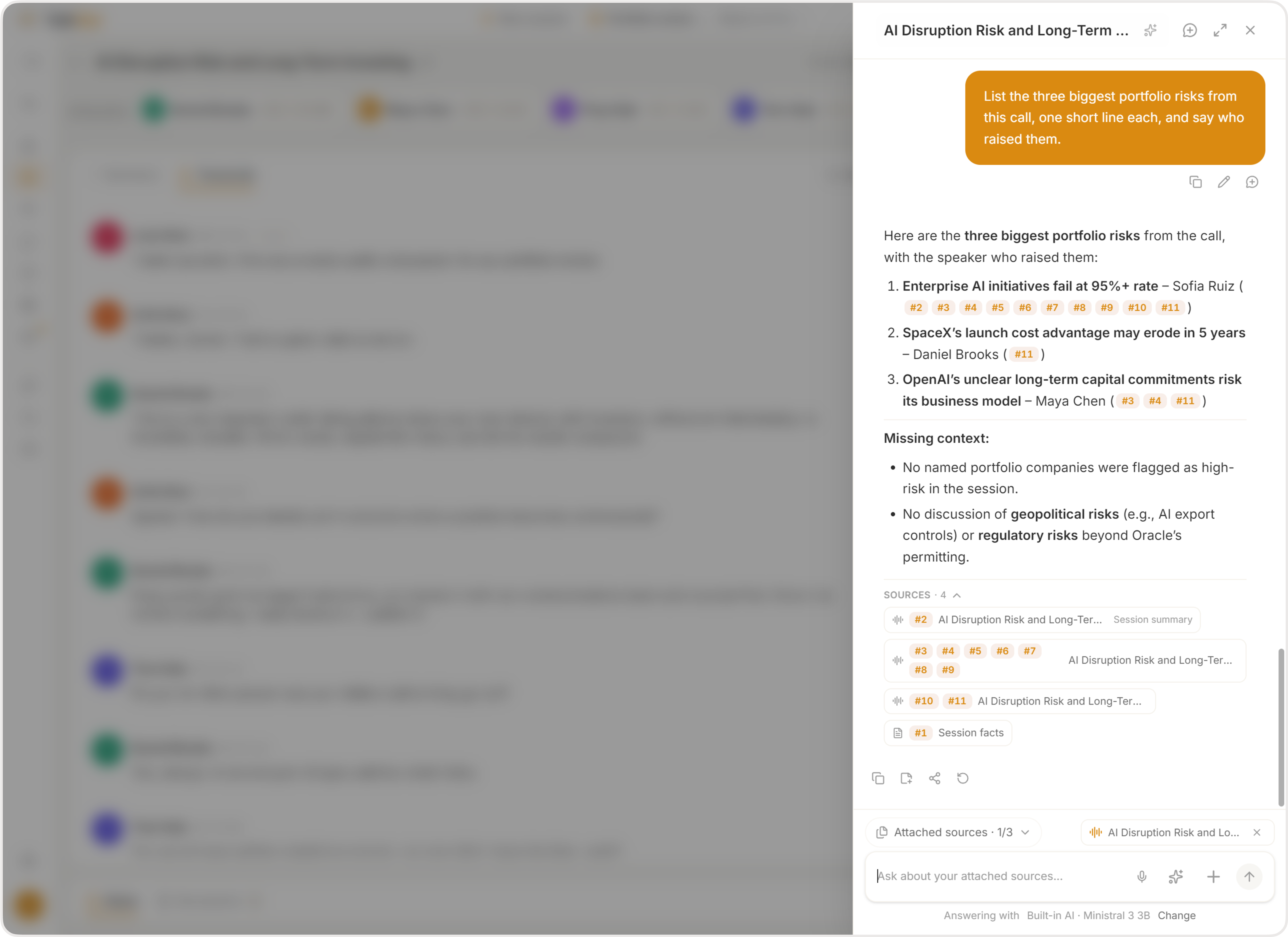
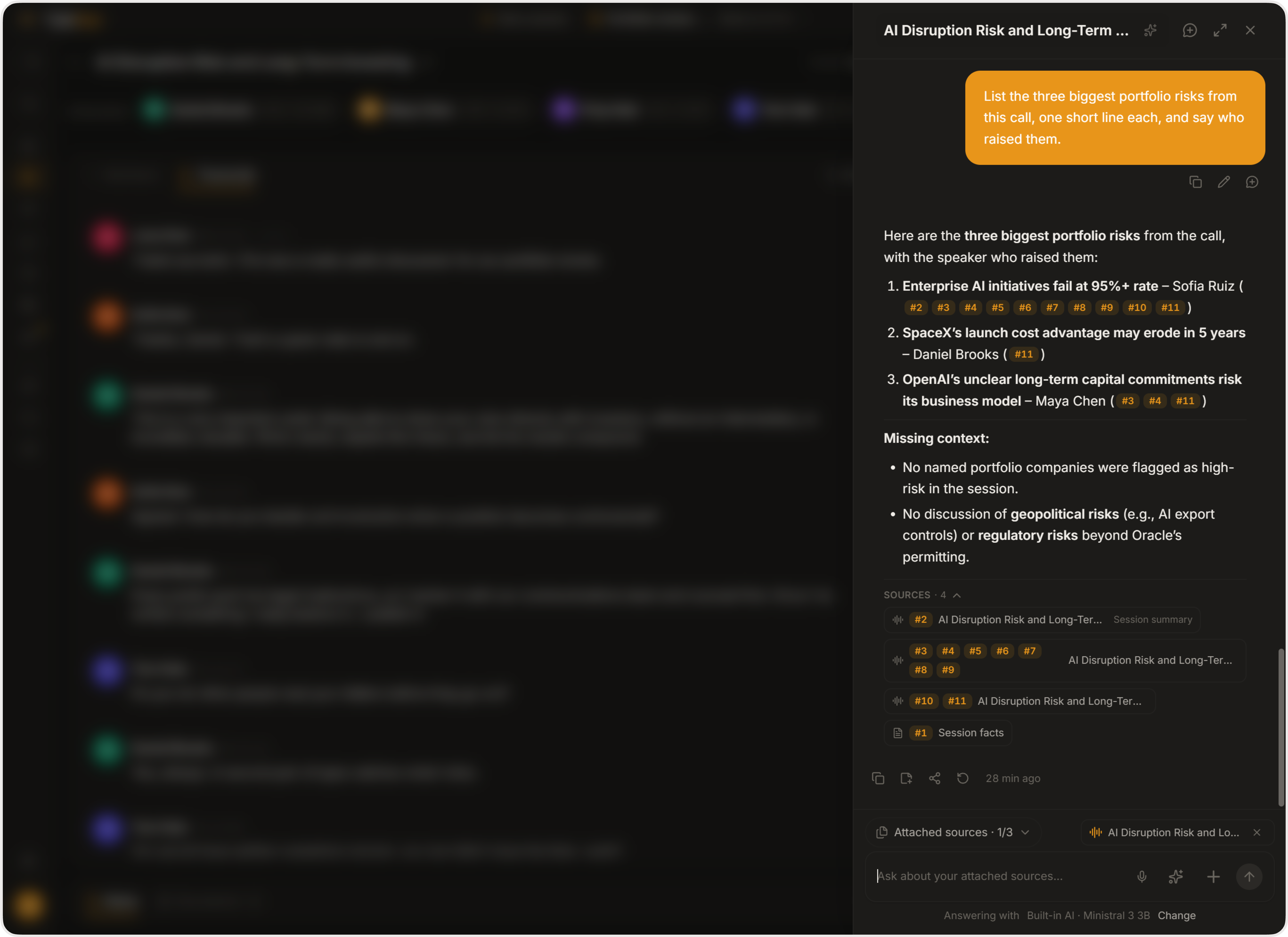
Candidate interviews
Keep role criteria, prior screens, and evidence visible while you talk.
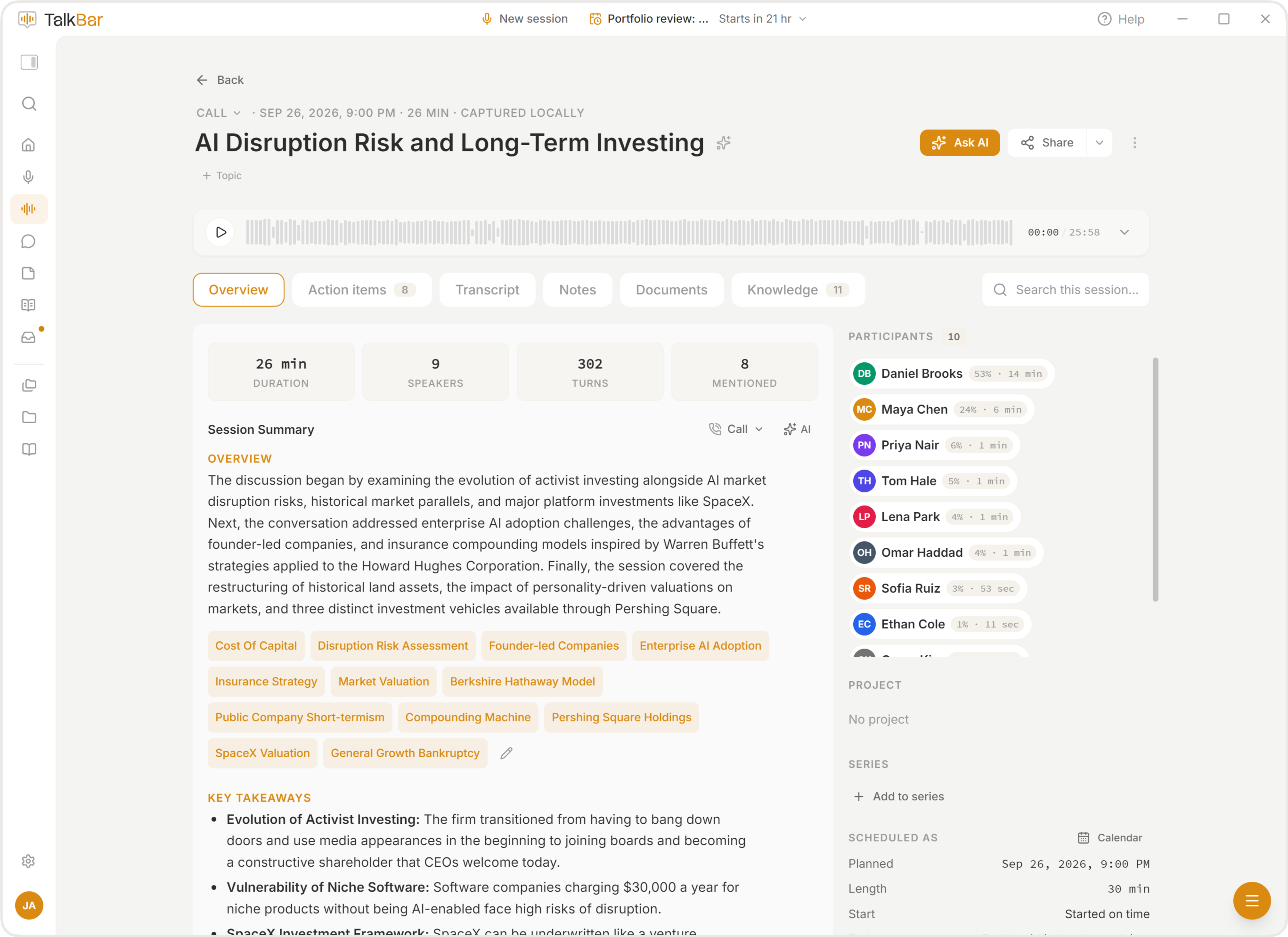
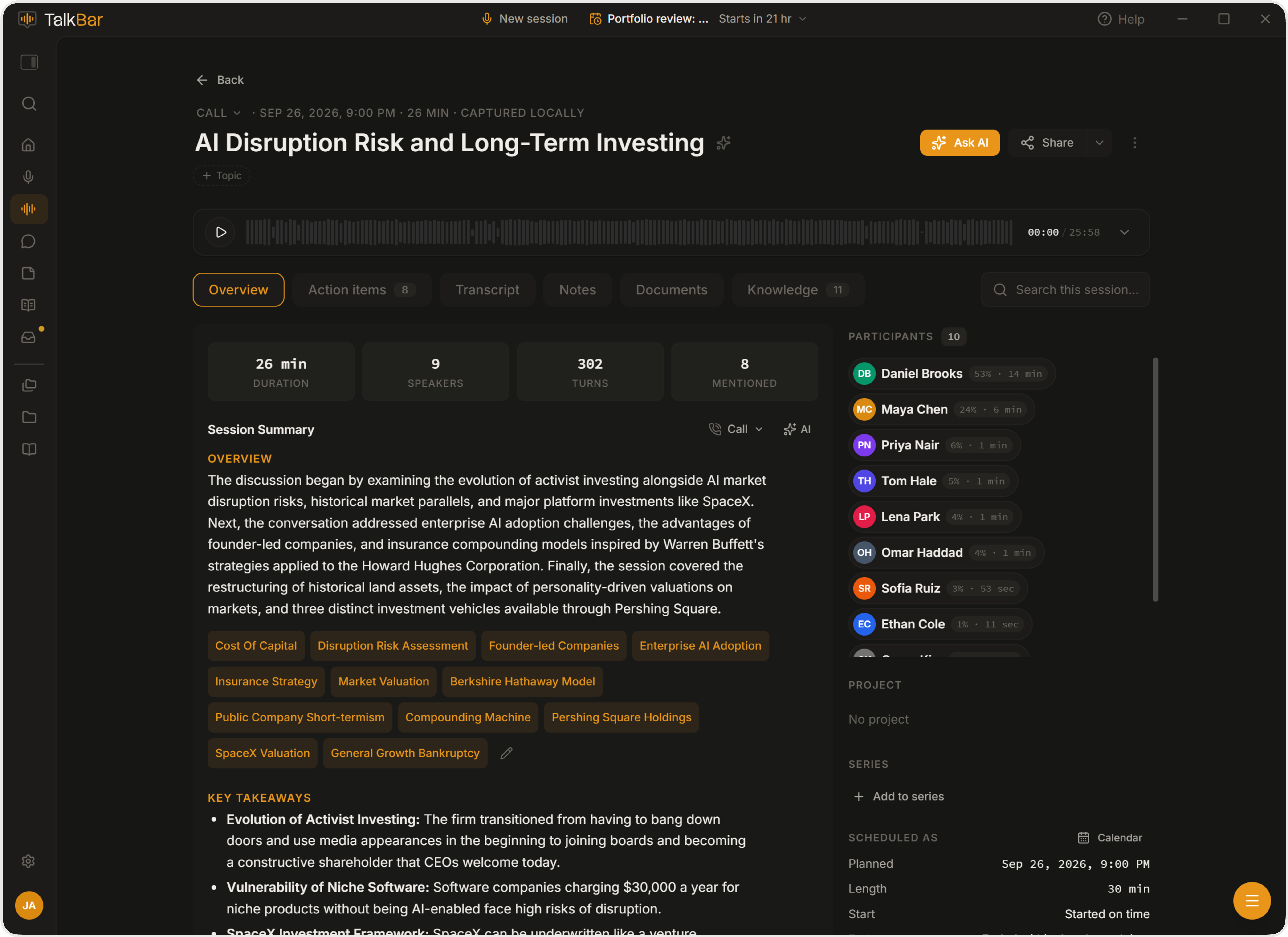
Structured notes
Turn the call into consistent notes: strengths, risks, and follow-ups.
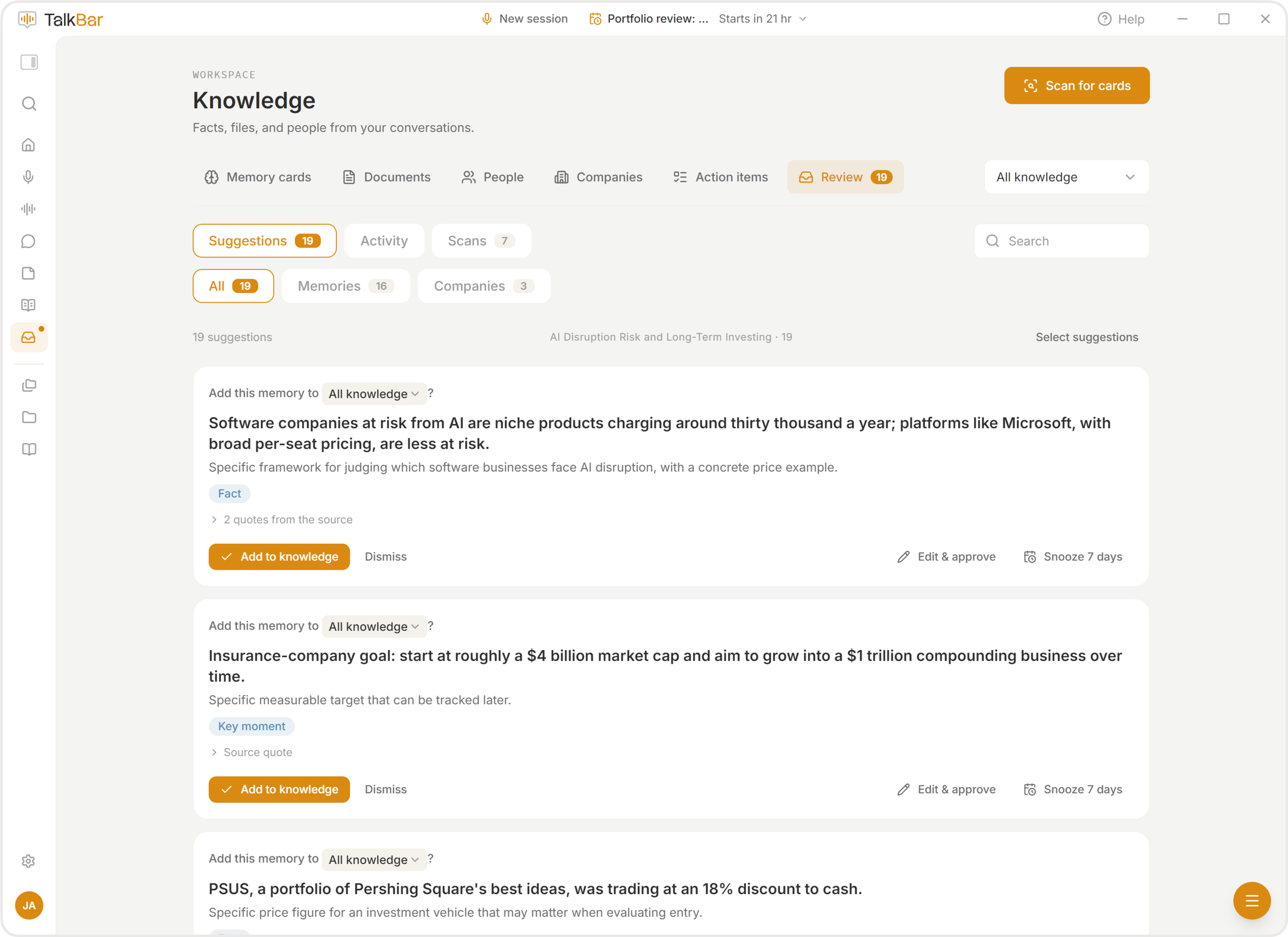
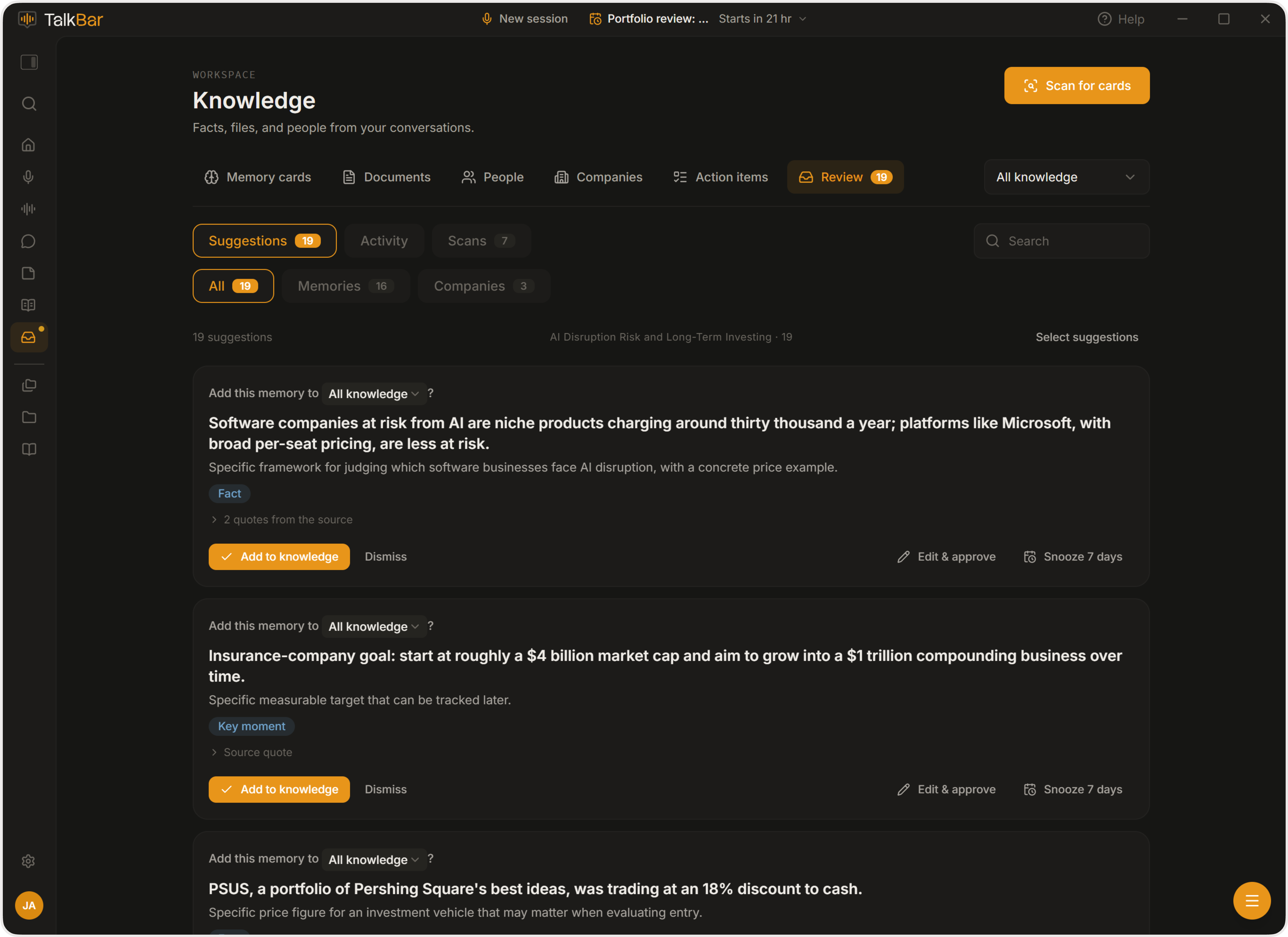
Research interviews
Connect quotes to themes and hypotheses without losing the original context.
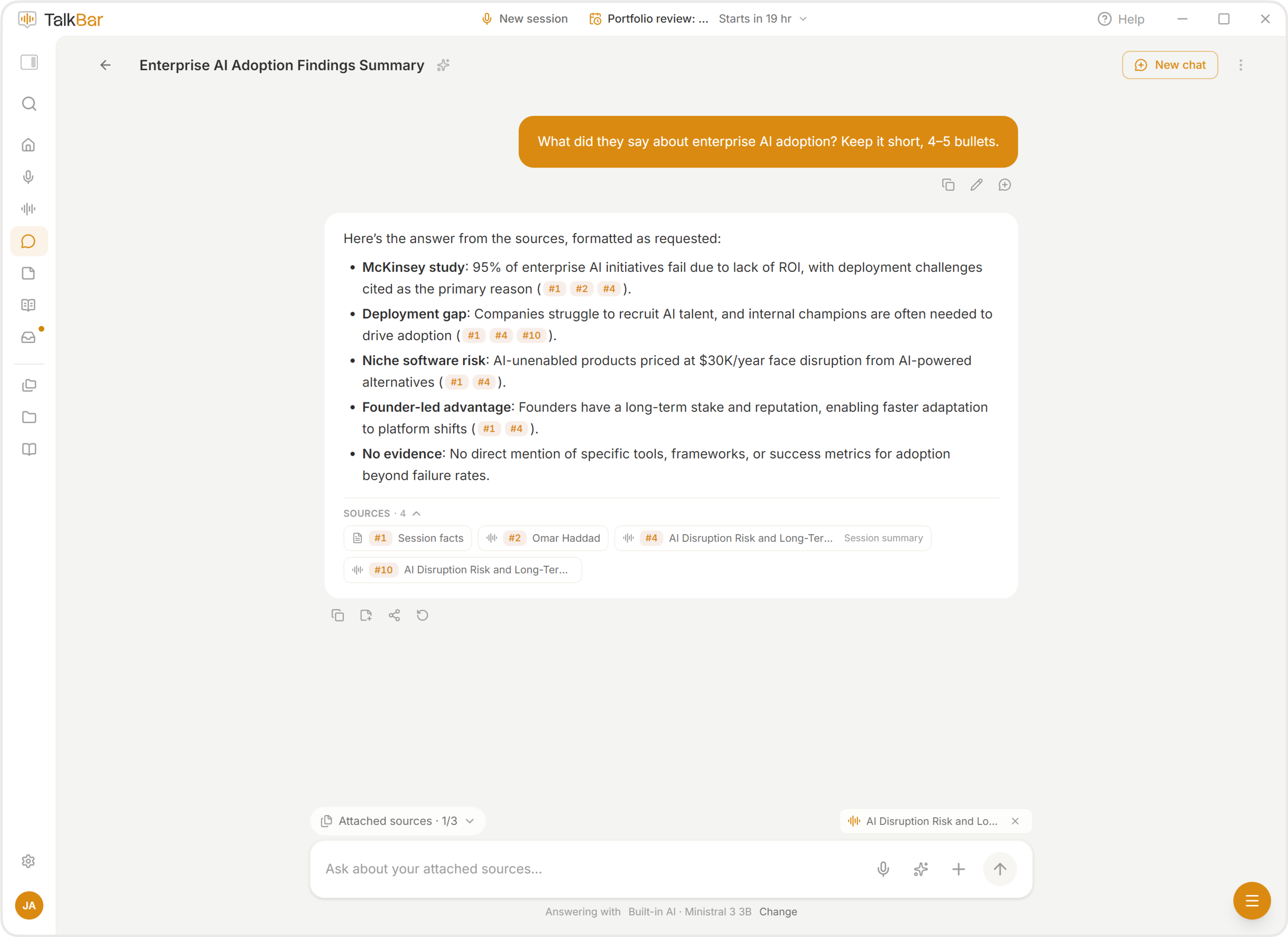
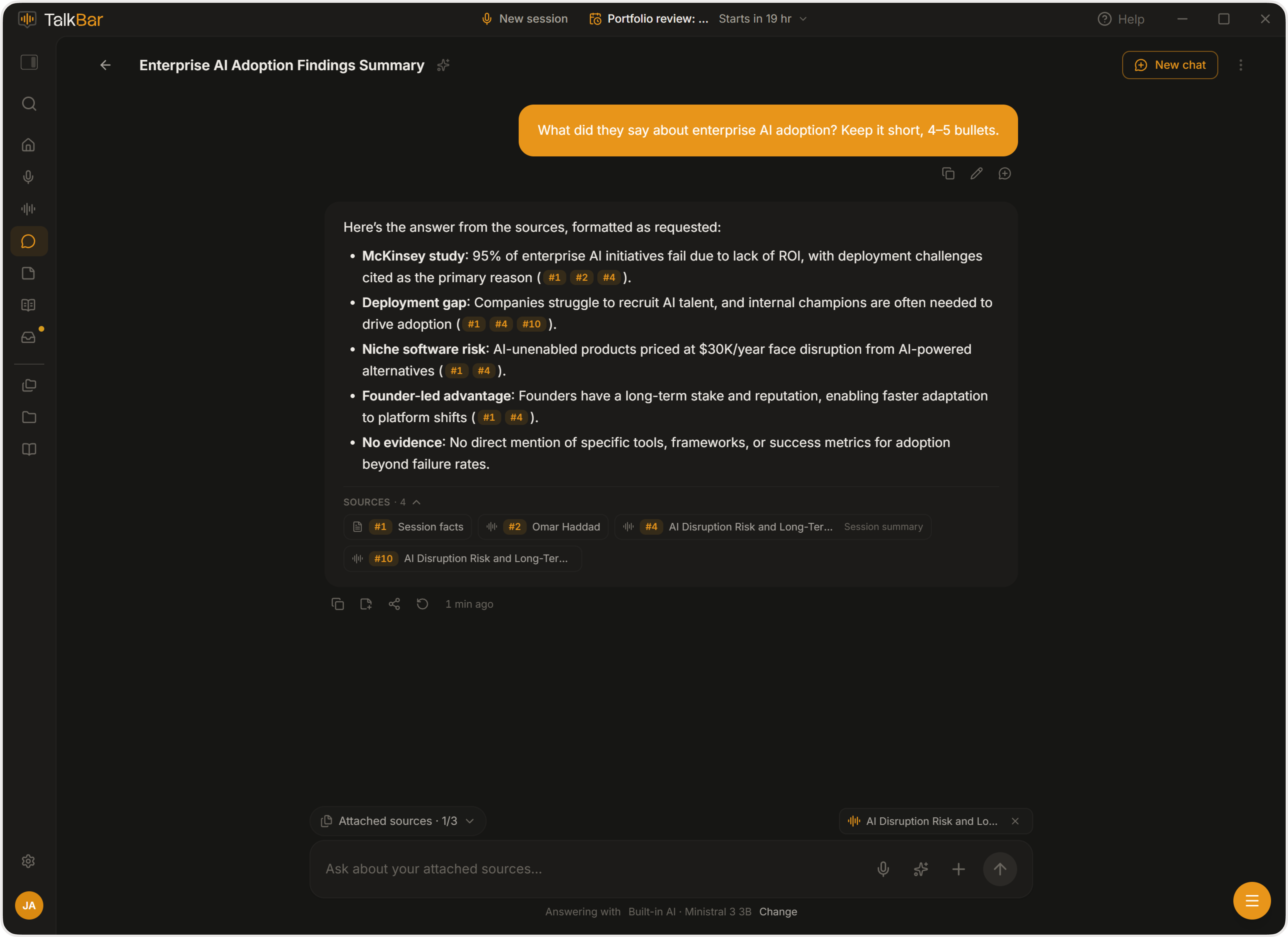
Open questions in view
Keep criteria and earlier answers on cards, so you can see what’s still open.
All that privacy comes in a calm, modern workspace that’s quick to learn and a pleasure to use every day. Click any screen to see it up close.
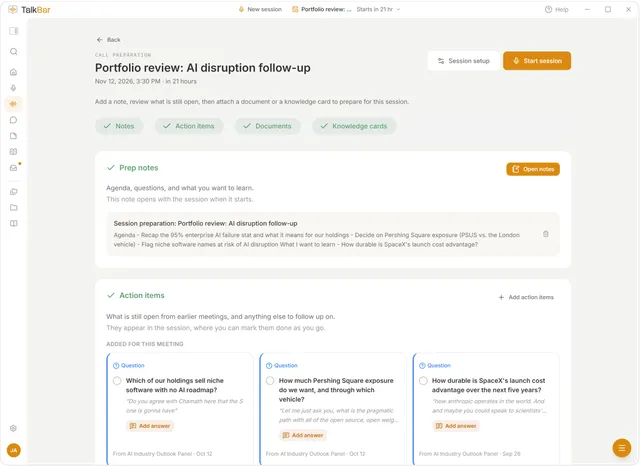
Prepare a call
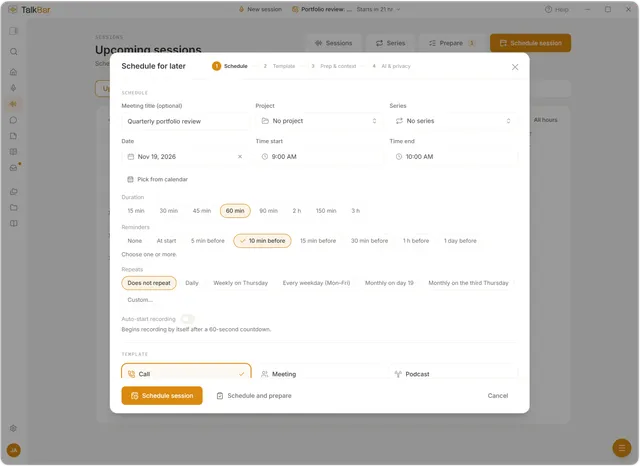
Schedule for later
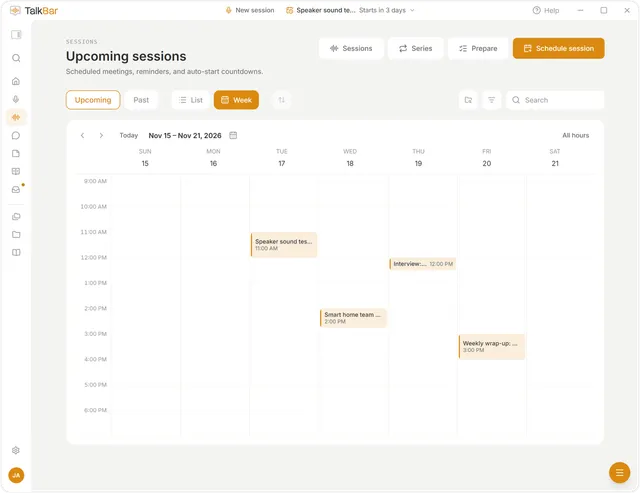
Upcoming sessions
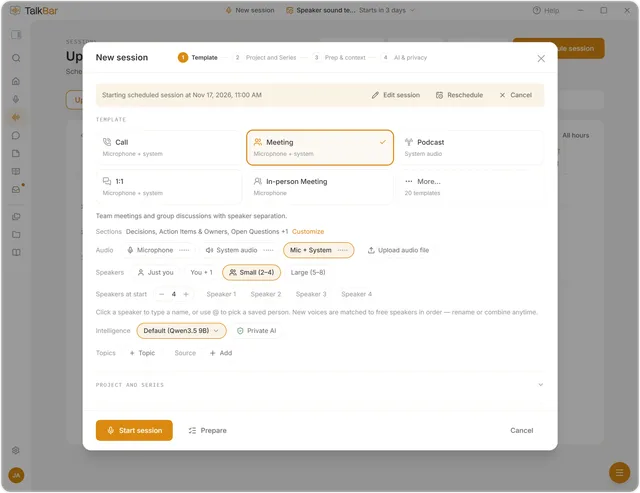
Start a session
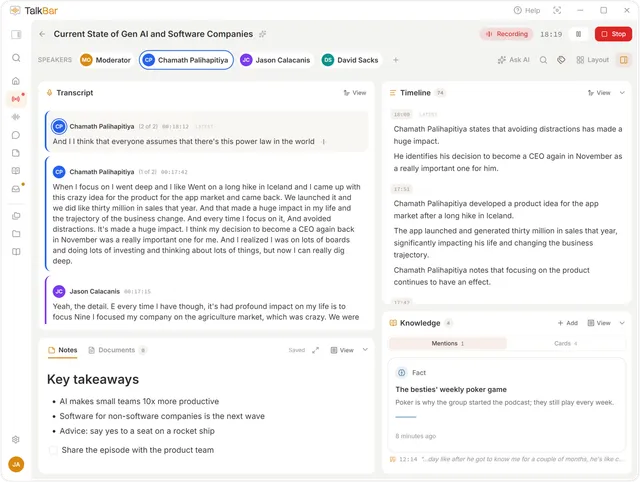
Live call
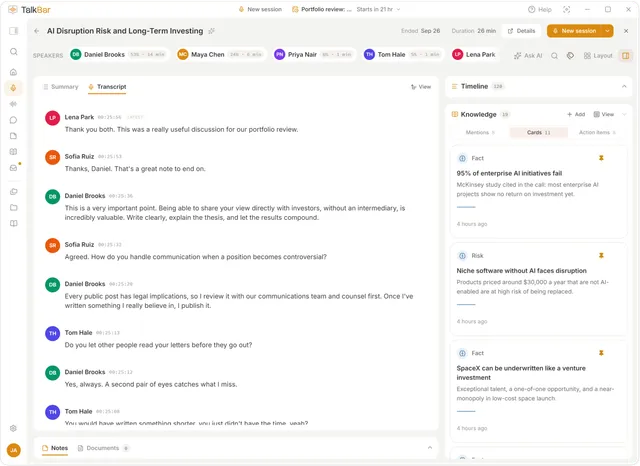
Transcript
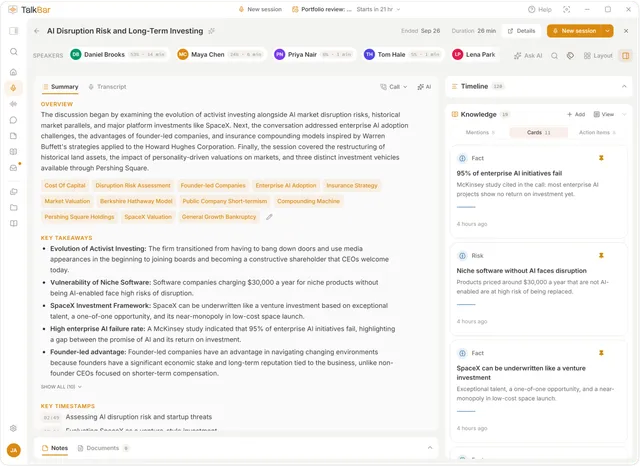
Knowledge Cards in a call
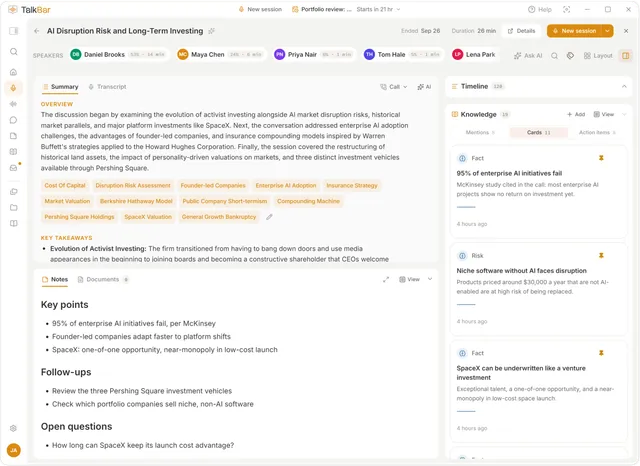
Notes, as you talk
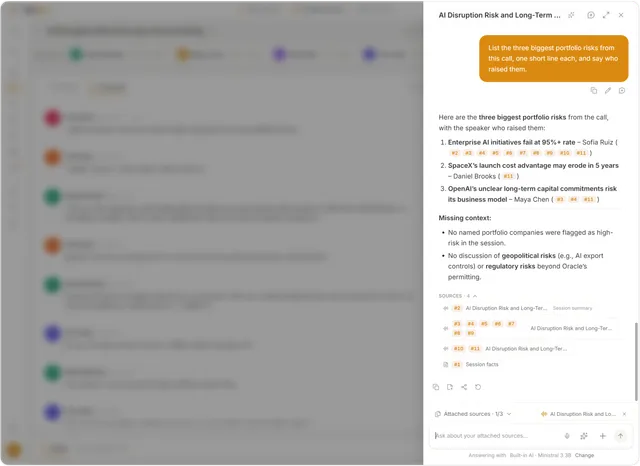
Ask during a call
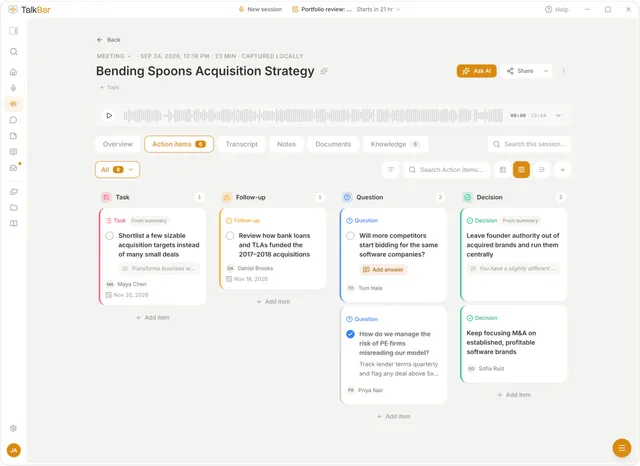
Decisions and follow-ups
Record meetings and calls from your desktop: your mic and your computer’s audio. No bot joins.
Notes, documents, Knowledge Cards, and action items for one call or a recurring series.
Import PDFs, Word files, and Markdown to read, search, and scan for Knowledge Cards.
Write from a template and link notes to sessions, projects, or labels.
Search every transcript, note, and document, kept on your computer.
Decisions, open questions, and action items you can bring to the next call.
Names, acronyms, and client terms, spelled your way in summaries.
Ask one session, one document, or all your knowledge, with sources.
Shape summaries and notes, and add outputs like a client-ready recap.
Choose what’s recorded, whether audio is kept, and what’s deleted.
Markdown, text, HTML, JSON, subtitles, or ZIP, or straight to Obsidian or Notion.
Transcription stays on your computer. Run AI there too, with a built-in model or Ollama, or connect a provider with your own key.
Cards during the call, memory after it, exports only when you choose.
The Knowledge Cards and action items you attached light up when the conversation reaches them.
Leave with a summary, open questions, and action items for the next call.
Search sessions, notes, and imported documents, and open the source behind any answer.
Copy a recap, or export Markdown, HTML, or JSON, or send it to Obsidian.
Meeting, 1:1, interview, sales call, research, or one you built yourself.
Turn on your mic and your computer’s audio.
Add documents, notes, Knowledge Cards, and open action items.
Record from your desktop and follow the live transcript.
Polish the summary, move action items to the next call, and save new Knowledge Cards.
Capture without a meeting bot and keep your conversations on your computer. AI can stay there too, or bring your own key when you want a stronger model.
| Capability | TalkBar | Cloud meeting bots | Browser-only tools |
|---|---|---|---|
| All AI on your computerPrivate AI ModeTurn it on and transcription, summaries, and chat run on local models, built in or through Ollama. No external AI providers used even if you’ve connected one. | Yes | No | Varies |
| Bot-free captureRecords your mic and your computer’s audio. No bot joins the meeting. | Yes | No | Varies |
| Your workspace stays on your computerTranscripts, notes, and memory are saved locally. | Yes | No | No |
| Documents stay on your computerImported files are stored and searched locally. | Yes | Varies | Varies |
| Local AI or your own keySummaries, chat, dictation, and scans each run on the model you choose, local or with your key. | Yes | No | No |
| Live translation on your computerFollow the transcript in another language with a local model. English ↔ Russian, English → Spanish, German, French. | Yes | No | No |
| Nothing is remembered without your OKKnowledge scans only suggest. You approve, edit, or dismiss every card. | Yes | Varies | Varies |
| Scan a file without keeping itA temporary upload feeds one scan, then is removed from your library. | Yes | No | No |
| You choose whether audio is keptKeep the recording, or keep only the transcript. | Yes | Varies | Varies |
| Your data as plain filesOpen your data folder, make a ZIP backup, and restore it anywhere. | Yes | No | No |
| Knowledge Cards you attachThey light up when the conversation reaches them. | Yes | No | No |
When you compare tools, look at where the recording, the notes, and the AI actually live.
Use the same template for each interview, and every set of notes shares one structure: criteria, evidence, strengths, risks, and follow-ups. The comparison is still yours to make.
No. TalkBar records your mic and your computer’s audio from the desktop, so no one new joins the participant list. Recording-consent rules still apply.
On your computer. It stays there unless you export or share it, or use an AI provider with your own key.
Windows · Windows on Arm · Mac with Apple silicon
Download TalkBarChoose the version for your computer.
Windows 10 or 11, 64-bit
Windows 11 on Arm
Mac with Apple silicon, macOS 13.4 or later
TalkBar is in private preview. Leave your email and we’ll send one message when it’s ready.
Have a question?